

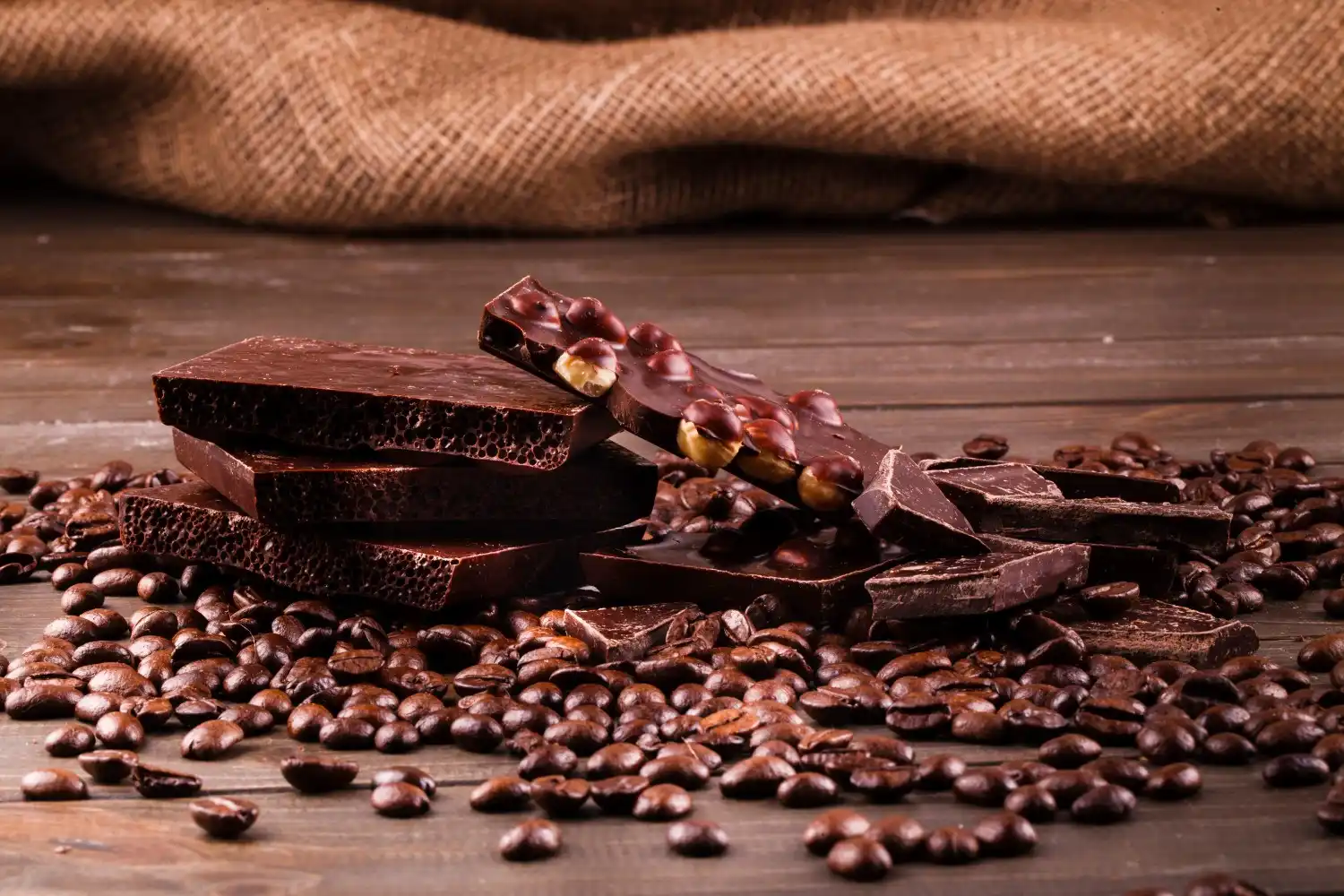
Chocolate is something people around the world really love to eat, I mean it’s pretty common. You can get it in many different designs, like a dark chocolate bar or in some creamy milk chocolate dessert, sometimes with extra flavors. But do you ever actually think about how chocolate is produced? The whole path it takes, from a bean on a tree in a tropical place, to a tasty chocolate bar in your hand, is honestly a bit surprising and kind of fascinating too. It involves growing things, science, people who’re good at making things and new ideas.
In this guide we will show you how chocolate is made, one bit at a time from the bean to the bar.
Where Chocolate comes From : Cacao Trees
Making chocolate kinda starts with the cacao tree, this special tree that grows near the equator, in warm zones. A few places that grow a lot of cacao are Côte d’Ivoire, Ghana, Ecuador, Brazil and Peru, so yeah.
These trees produce colorful pods that hang right on the trunk, and also on the branches. Each pod usually holds about 20 to 50 cacao beans inside, they sit there with a sweet white pulp around them .
Picking the Cacao Pods
When the pods are ready people pick them by hand. Farmers use knives or machetes to cut the pods from the tree without doing harm to it.
After that they open the pods, to take the cacao beans out. Then they gather the beans along with the pulp. They get everything set up for the next crucial step, which is called fermentation.
Fermentation Making Chocolate Taste Good
Fermentation is one of the important parts in making chocolate taste good.
Fresh cacao beans do not taste like chocolate, at all. So people put the beans in boxes or cover them with banana leaves, for a few days. During the fermenting :
- Little yeasts and bacteria start breaking down the pulp.
- It gets hot inside the boxes or leaves.
- The beans start to taste more complex and interesting.
- They do not taste as bitter as they did before.
Drying the Cacao Beans
The cacao beans are too wet after they have fermented so they need to be dried before they can be moved and stored. The farmers put the cacao beans out in the sun on platforms or patios to dry. They turn the cacao beans a lot so they dry evenly.
Proper Drying helps with things.
- This helps keep the cacao beans tasting good
- Keep mold from starting on the cacao beans
- It also readies the cacao beans for shipping
Sorting and Roasting
When the dried cacao beans get to the place where they make chocolate they clean them. Sort them out.
They take out any stuff, broken cacao beans and bad things that are in with the cacao beans.
Then they roast the cacao beans in an oven where the temperature is sort of just right.
Roasting the cacao beans does a few things, and it is kind of important.
It makes the cacao beans taste much better.
It also helps get rid of some of the moisture that’s in the cacao beans.
It kills any bacteria that might be hanging out on the cacao beans.
And after roasting the outside layer of the cacao bean is way easier to take off.
Cracking and Winnowing
After the cacao beans are roasted they crack them open.
This separates the outside of the cacao bean from the part, which is called the cacao nib.
This is called winnowing.
The cacao nibs have the components in them that later get turned into chocolate, like cocoa solids and also cocoa butter.
The outer shells of the cacao beans can be used for things such as farming, or food, depending on how people want to do it.
Grinding the cacao nibs
After that, they grind the cacao nibs into a paste that’s kind of called chocolate liquor.
That chocolate liquor has no alcohol in it, it’s basically just ground up cacao beans.
- When they grind the cacao nibs everything gets hot real fast, like the whole process heats up.
- The cocoa butter melts
- The cacao nibs turn into a liquid paste.
Mixing and Refining
At this stage they add ingredients. What they add depends on the type of chocolate.
For example:-
- Dark Chocolate
- Chocolate liquor
- Cocoa butter
- Sugar
- Milk Chocolate
- Cocoa butter
- Sugar
- Milk powder or condensed milk
- White Chocolate
- Cocoa butter
- Sugar
- Milk solids
- No cocoa solids
- Packaging and Distribution
The last step is to package the chocolate. This is what keeps it safe from moisture heat, and dust
Conclusion
When you start to understand how chocolate is produced, you can really see the incredible craft behind each bite. It’s kind of a chain of small events, from harvesting cacao pods and fermenting the beans, to roasting, refining, conching and then tempering. Every tiny step adds something to the flavor, texture, and overall quality, so the end result doesn’t just taste good it feels right too. So next time you eat a piece of chocolate, you’ll probably think about that whole trek from bean to bar, that remarkable path so you get that rich, unforgettable taste .
For anyone who enjoys premium chocolates and handcrafted desserts, The Chocolate Room is the Best Place for Chocolate Lovers to indulge in rich flavors and memorable experiences.



Add comment